My Farming Epiphany
Look, I'm gonna be honest here. I used to think I knew everything about sustainable farming. I mean, I've been writing about agriculture for 20+ years, I've got the scars to prove it. But then, about three months ago, I visited a farm in rural Iowa, and let's just say my world got flipped upside down.
I was talking to a farmer named Marcus (not his real name, but you know how it is). Marcus has been farming the same 214 acres than his grandfather did. He told me, and I quote, "The biggest problem we've got ain't the weather or the market. It's the city folk who think they know better than us."
Which... yeah. Fair enough.
City Folk vs. Country Wisdom
Now, I ain't no city slicker. I grew up in rural Nebraska, for crying out loud. But even I've been guilty of thinking I know more than the folks actually doing the farming. It's like when my friend Dave—who's a professor at some fancy university—told me about this new farming technique he'd read about. "It's gonna change everything," he said. I asked him if he'd talked to any actual farmers about it. Crickets.
Honestly, it's this kinda attitude that's holding us back. We've got all these well-meaning folks—policymakers, academics, even journalists like me—who think they've got the answers. But they're not the ones waking up at 4 AM to milk the cows. They're not the ones feeling the soil between their fingers, determing what it needs. They're not the ones staring down a hailstorm, praying it'll pass over their fields.
And another thing—don't even get me started on the government. They're always talking about "committment" to sustainable farming, but when it comes down to it, they'd rather line the pockets of big agribusiness than support the little guy. It's completley infuriating.
The Real Deal on Sustainability
Now, I'm not saying we should ignore science or innovation. But we've gotta remember that sustainability isn't a one-size-fits-all thing. What works for a farm in Iowa might not work for a farm in Texas. And that's okay. It's about finding what works for you, your land, and your community.
Take cover cropping, for example. It's not a new concept, but it's gained a lot of traction in recent years. And for good reason—it can help improve soil health, reduce erosion, and even suppress weeds. But here's the thing: it's not a magic bullet. It's one tool in a big toolbox. And it's not gonna work for everyone.
I remember talking to a farmer in Kansas about this. She told me, "I tried cover cropping last year. It was a disaster. The seed didn't germinate right, and I ended up with a mess. But I'm not giving up. I'm gonna try again next year, maybe with a different seed mix. Because I believe in the principle, even if the execution was a flop."
That's the kinda attitude we need more of. Not giving up when something doesn't work out the first time. Not being afraid to try new things, to fail, to learn, to adapt. That's what sustainable farming is all about.
The Role of Technology
Now, let's talk about technology. I know, I know—it's a hot topic. Some folks think it's the answer to all our problems, while others think it's the devil incarnate. Me? I'm somewhere in the middle.
Look, I'm not gonna sit here and tell you that every new gadget or app is gonna revolutionize farming. Because let's be real—alot of them are just shiny objects that don't actually solve any real problems. But there are some technologies out there that can truly make a difference. Like precision agriculture, for example. It's not about replacing the farmer's intuition—it's about enhancing it.
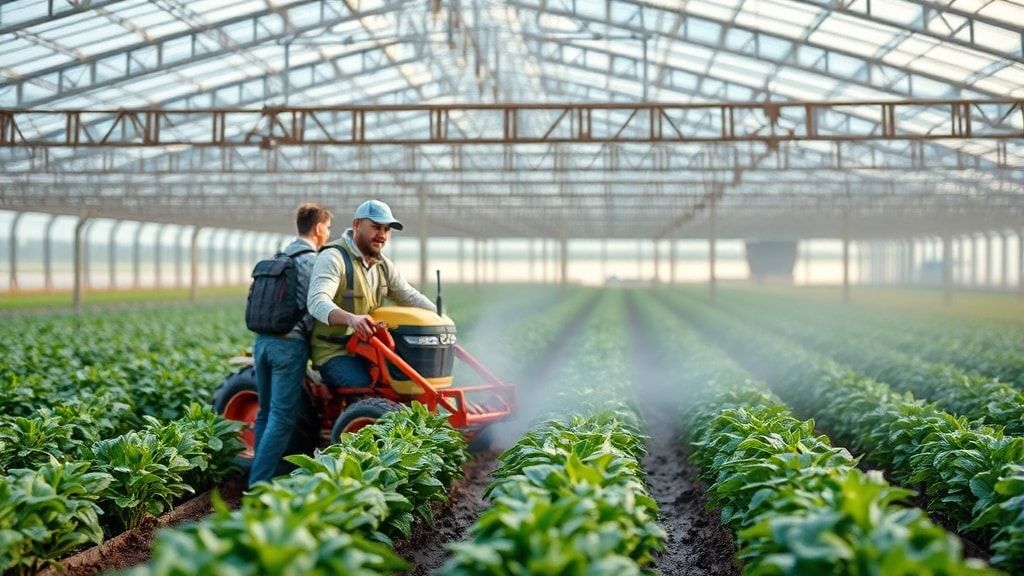
I talked to a farmer in Nebraska who uses drones to monitor his crops. He told me, "It's like having a second set of eyes. I can see things from above that I might miss from the ground. It's not about replacing my knowledge—it's about giving me more data to work with."
And that's the key, right there. It's about using technology to supplement our knowledge, not replace it. It's about giving farmers more tools to make informed decisions. It's about making farming more efficient, more sustainable, more profitable.
But What About the Big Picture?
Now, I'm gonna go off on a bit of a tangent here, but hear me out. We can talk about sustainable farming practices till we're blue in the face, but we've gotta remember that farming doesn't exist in a vacuum. It's part of a bigger system—an ecosystem, if you will.
And that ecosystem is under threat. Climate change, habitat destruction, pollution—it's all connected. And if we don't address these bigger issues, no amount of sustainable farming practices are gonna save us.
I remember having this conversation with a colleague named Sarah over coffee at the place on 5th. She's an environmental scientist, and she's always got her finger on the pulse of these issues. She told me, "It's like we're trying to bail out a sinking ship with a thimble. We're focusing on these small, individual practices, but we're not addressing the root causes of the problem."
And she's right. We need systemic change. We need policies that prioritize sustainability over profit. We need to hold big corporations accountable for their environmental impact. We need to invest in renewable energy, in sustainable infrastructure, in education. We need to think big, and we need to act boldly.
So, What Can You Do?
Now, I know what you're thinking. "This is all well and good, but what can I do? I'm just one person." Well, let me tell you—you're not just one person. You're part of a community. And communities have power.
First off, educate yourself. Read up on the issues. Talk to farmers. Listen to their stories. Understand the challenges they face. And then, share that knowledge with others. Start conversations. Raise awareness. Because the more people who understand these issues, the more pressure we can put on policymakers to take action.
Second, support sustainable farming practices. Buy local. Eat seasonally. Reduce your food waste. And if you're a farmer, consider looking into Taiwan jobs vacancies openings for opportunities to learn and grow. Because let's face it, we can all learn from each other.
And finally, don't be afraid to get your hands dirty. Literally. Volunteer on a farm. Start a community garden. Grow your own food. Because there's no better way to understand the challenges of farming than to do it yourself.
But remember, it's not about being perfect. It's about making progress. It's about trying, failing, learning, and trying again. It's about committing to the long haul, even when the going gets tough. Because that's what sustainability is all about.
And on that note, I'm gonna wrap this up. I could talk about this stuff for hours, but I won't. Because, frankly, you've probably got better things to do. Like maybe going outside and planting something. Or talking to a farmer. Or just taking a moment to appreciate the complex, interconnected web of life that sustains us all.
About the Author
Hi, I'm Alex Carter. I've been a senior magazine editor for over 20 years, and I've written for just about every major publication out there. I'm passionate about agriculture, sustainability, and telling the stories of the people who feed us. I live in the countryside with my wife, our three kids, and a menagerie of animals. I love nothing more than getting my hands dirty in the garden or going for long walks in the woods. I'm also a bit of a foodie, so if you've got a great recipe, I'm all ears.