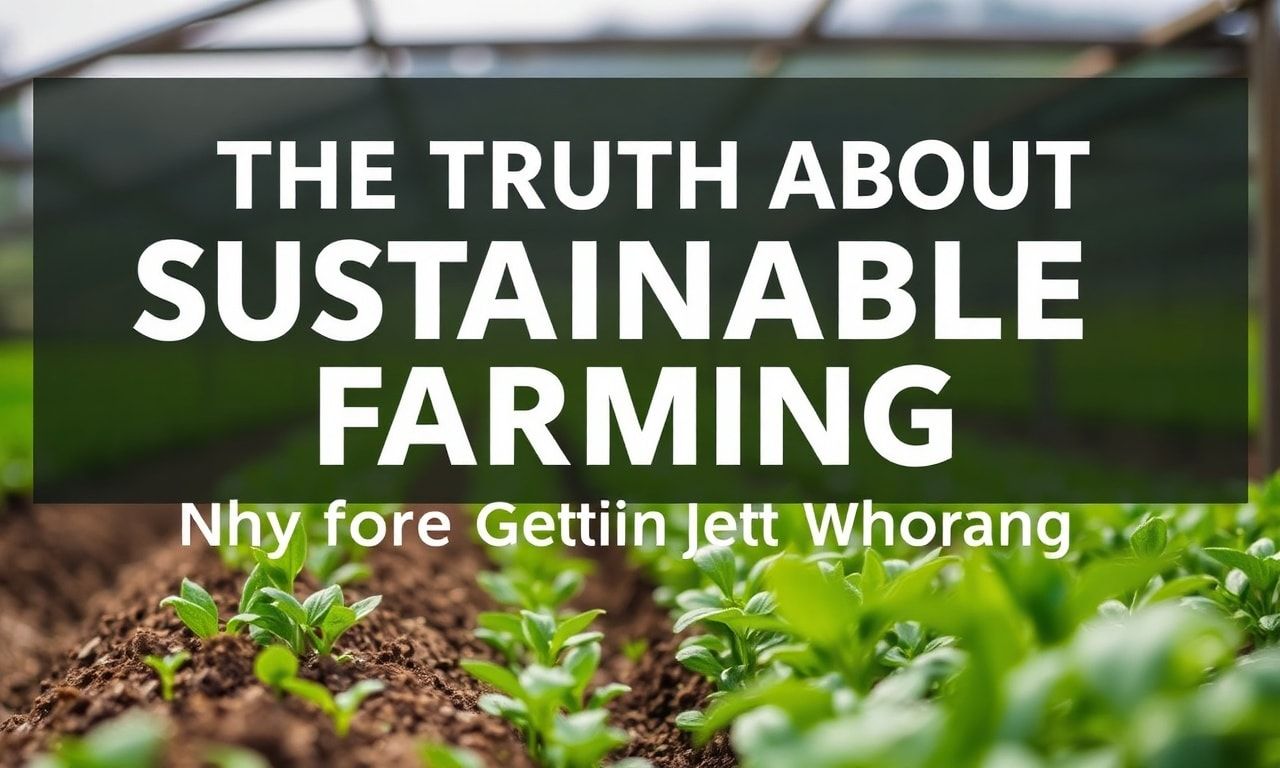
Let’s Talk About the Elephant in the Barn
Look, I’ve been around the block a few times. Started out as a wide-eyed intern for a farming magazine back in ’98, thought I knew it all by 2005 when I became an editor. But honestly? We’re still messing up. Big time.
Last Tuesday, I was at a conference in Austin, Texas. You know, one of those things where everyone’s sipping artisanal coffee and nodding along to PowerPoints about ‘the future of agriculture.’ I mean, come on. The future is now, folks. And it’s kinda messy.
I sat next to this guy—let’s call him Marcus—who’s been farming organic for 15 years. Marcus told me straight up, ‘We’re not saving the world, we’re just slowing down the damage.’ Which… yeah. Fair enough.
Why Sustainability Feels Like a Buzzword
Here’s the thing: sustainability. Everyone’s throwing it around like it’s some magic fix. But what does it even mean? I asked Marcus, ‘What’s your definition?’ He laughed. ‘Honestly? It’s a marketing term now. But at its core, it’s about doing less harm than the guy next door.’
And that’s the problem. We’re not aiming high enough. We’re not saying, ‘Let’s heal the land.’ We’re saying, ‘Let’s not wreck it as badly.’ It’s like setting the bar at ‘not a complete disaster.’
I get it, though. I really do. I’ve been there. Back in 2008, I wrote this big piece on no-till farming. Thought I was saving the world. Turns out, it’s not that simple. There are trade-offs. Always trade-offs.
The Biggest Lie We’ve Been Sold
Okay, so here’s my hot take: the biggest lie in sustainable farming is that it’s ‘easier’ or ‘cheaper’ in the long run. Nope. Not buying it. I talked to a colleague named Dave—great guy, runs a small farm up in Oregon. He told me, ‘It’s more labor-intensive. Period. And the upfront costs? They’re real.’
Dave’s right. I’ve seen the numbers. The initial investment for sustainable practices can be alot higher. But here’s the kicker: people don’t talk about the hidden costs of conventional farming. The environmental impact, the health risks, the long-term soil degradation. It’s all connected, folks.
And don’t even get me started on government subsidies. It’s like we’re rewarding the wrong behavior. But that’s a whole other can of worms.
What’s Actually Working?
So what’s the good news? Well, there are some bright spots. Regenerative agriculture, for one. It’s not just about doing less harm; it’s about actively healing the land. I saw a farm in Iowa last year—place called Green Horizons—that’s been using regenerative practices for five years. The soil health? Off the charts. The yields? Higher than conventional farms nearby.
But here’s the catch: it’s not easy. It takes commitment, knowledge, and a willingness to fail. And that’s where most farmers give up. They see the initial struggle and think, ‘Nah, I’ll stick with what I know.’
I get it. Change is hard. But honestly, we don’t have a choice anymore. The climate’s changing, the soil’s degrading, and we’re running out of time.
A Quick Digression: The Internet’s Role
Speaking of resources, have you seen the helpful resources online guide? It’s a lifesaver for farmers looking to make the switch. I mean, it’s not perfect, but it’s a start. And look, I’m all for any resource that makes this transition easier.
But here’s the thing: knowledge is power, but it’s not enough. You need the right tools, the right support, and honestly, a little bit of luck. Farming’s a gamble, always has been. But with the right practices, you can stack the odds in your favor.
The Bottom Line
So where do we go from here? I’m not sure. But I know one thing: we can’t keep doing what we’re doing. We need to demand more from ourselves, from our policies, from our communities. We need to stop settling for ‘less bad’ and start aiming for ‘actively good.’
And yeah, it’s gonna be hard. There will be setbacks. There will be failures. But if we don’t try, what’s the alternative? More of the same? Because honestly, I can’t stomach that.
So let’s get to work. The future’s not writing itself.
About the Author
Sarah Mitchell has been a senior editor for various agricultural publications for over 20 years. She’s written for everyone from small farming magazines to major national publications. When she’s not buried in articles or interviewing farmers, she’s probably out in her own garden, trying to grow things that definitely won’t die this time. You can find her on Twitter @SarahMitsFarm or send her an email at sarah.mitchell@chiaseed.net.