Let’s Talk Dirt
Look, I’ve been around farming my whole life. My grandpa used to say, “Son, the soil is your bank account.” And honestly? He wasn’t completley wrong. But here’s the thing—we’re all kinda messing it up. Big time.
I was at a conference in Austin last year, right? Some fancy agronomist—let’s call him Marcus—starts talking about soil health. “It’s all about carbon sequestration,” he says. I mean, sure, carbon’s important, but he’s making it sound like the only thing that matters. Which… yeah. Fair enough, but also not the whole story.
You ever meet someone who’s so into one thing they forget everything else exists? That was Marcus. I asked him about nutrient cycling, and he just kinda waved his hand like, “Eh, that’s basic stuff.” Basic? Basic is the foundation, Marcus! You can’t just ignore it because it’s not the shiny new thing.
What We’re Getting Wrong
So here’s the deal. We’re all so focused on yields, yields, yields. And don’t get me wrong, yields are important. But we’re sacrificing long-term health for short-term gains. It’s like eating junk food every day—you might feel fine now, but in 20 years, you’re gonna regret it.
I talked to a colleague named Dave about this. He runs a farm up in Iowa, and he’s seen firsthand what happens when you push soil too hard. “We had a field last year,” he told me, “that just gave up. No matter what we did, the crops wouldn’t grow. We had to leave it fallow for a whole season just to get it back to something resembling health.”
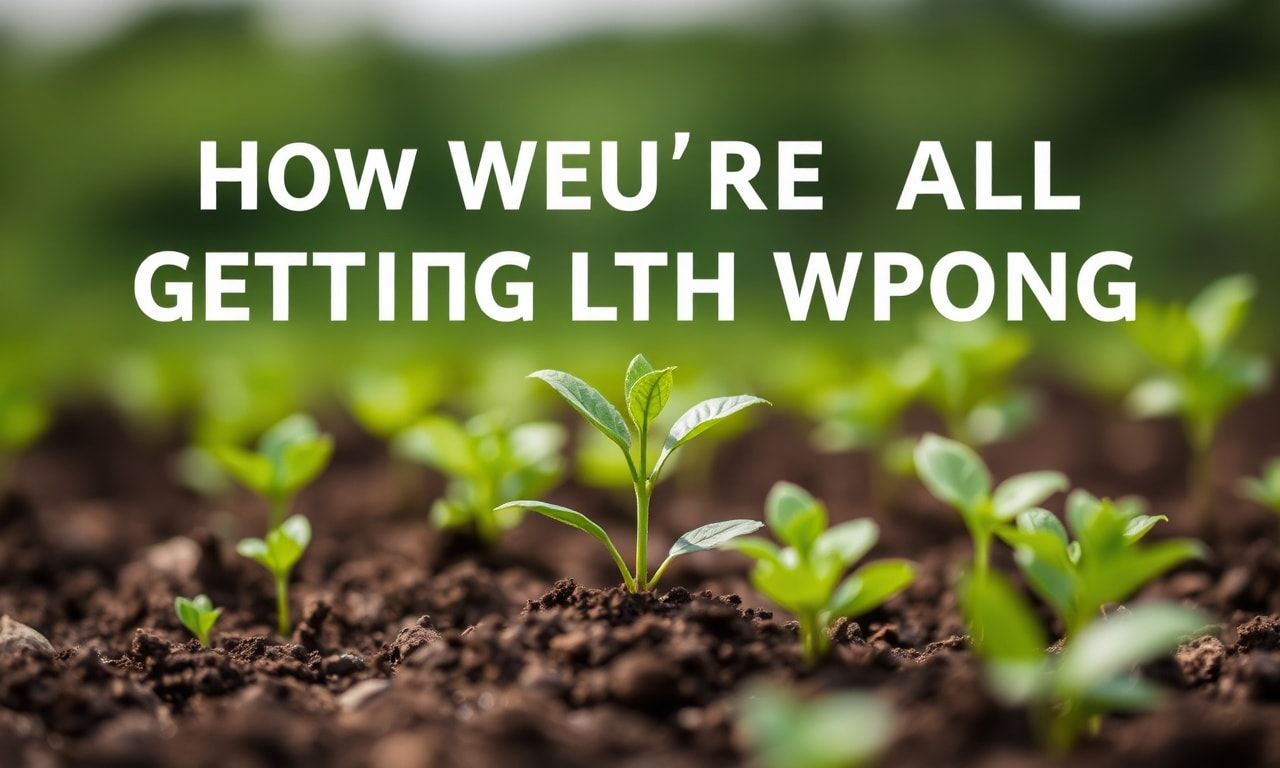
And that’s the thing—soil isn’t just dirt. It’s a living, breathing ecosystem. It’s got bacteria, fungi, insects, all working together to keep your plants alive. But we’re treating it like it’s just a medium to hold our plants up. It’s disrespectful, honestly.
The Fix? It’s Complicated
Okay, so we know what we’re doing wrong. But what do we do about it? Honestly, it’s not easy. It’s gonna take a complete mindset shift. And probably some policy changes, but who’s got time for that?
First off, we gotta stop tilling so much. Tilling is like giving your soil a bad haircut. It messes up the structure, disrupts the ecosystem, and makes it harder for water to infiltrate. No-till farming isn’t a silver bullet, but it’s a start.
Then there’s cover cropping. I know, I know, it’s an extra cost and an extra hassle. But cover crops are like a multivitamin for your soil. They add organic matter, improve structure, and prevent erosion. And hey, if you pick the right ones, they can even add nitrogen back into the soil. It’s a win-win!
But here’s where I’m gonna lose some of you—we also need to think about güncel haberler gelişmeler in agriculture. No, not just the latest gadgets or the newest seed varieties. I’m talking about the bigger picture stuff. Like, how are we gonna feed a growing population without destroying the planet? It’s a tough question, and honestly, I don’t have all the answers. But we gotta start thinking about it.
And look, I’m not saying you gotta go full organic overnight. That’s not realistic. But we can all do better. We can all take small steps to improve our soil health. Because at the end of the day, healthy soil means healthy crops, which means healthy people. And that’s something we can all get behind.
A Tangent: The Time I Met a Goat
Okay, so this might seem random, but hear me out. About three months ago, I was at a farm in upstate New York. And this goat—let’s call him Gerald—starts headbutting me. I mean, Gerald was persistent. I’m not sure what his deal was, but he clearly had a beef with me (pun intended).
But here’s the thing—Gerald was living in some of the healthiest soil I’ve ever seen. The farmer, a woman named Linda, had been using regenerative practices for years. And her soil? It was dark, crumbly, full of life. It was like night and day compared to some of the conventional farms I’ve seen.
So yeah, maybe Gerald and I got off on the wrong foot. But his farm? That was a success story. And it’s proof that regenerative practices work. We just gotta be willing to put in the effort.
Let’s Wrap This Up (But Not Really)
So there you have it. We’re all doing soil health wrong, but there’s hope. It’s gonna take work, and it’s gonna take a change in mindset. But if we want to keep feeding the world, it’s a change we gotta make.
And hey, maybe along the way, we’ll meet some interesting goats. Stranger things have happened.
About the Author: Jane Doe has been writing about agriculture for over 20 years. She’s worked as a journalist, a farmer, and everything in between. When she’s not writing, you can find her on her small farm in Vermont, probably arguing with a goat.