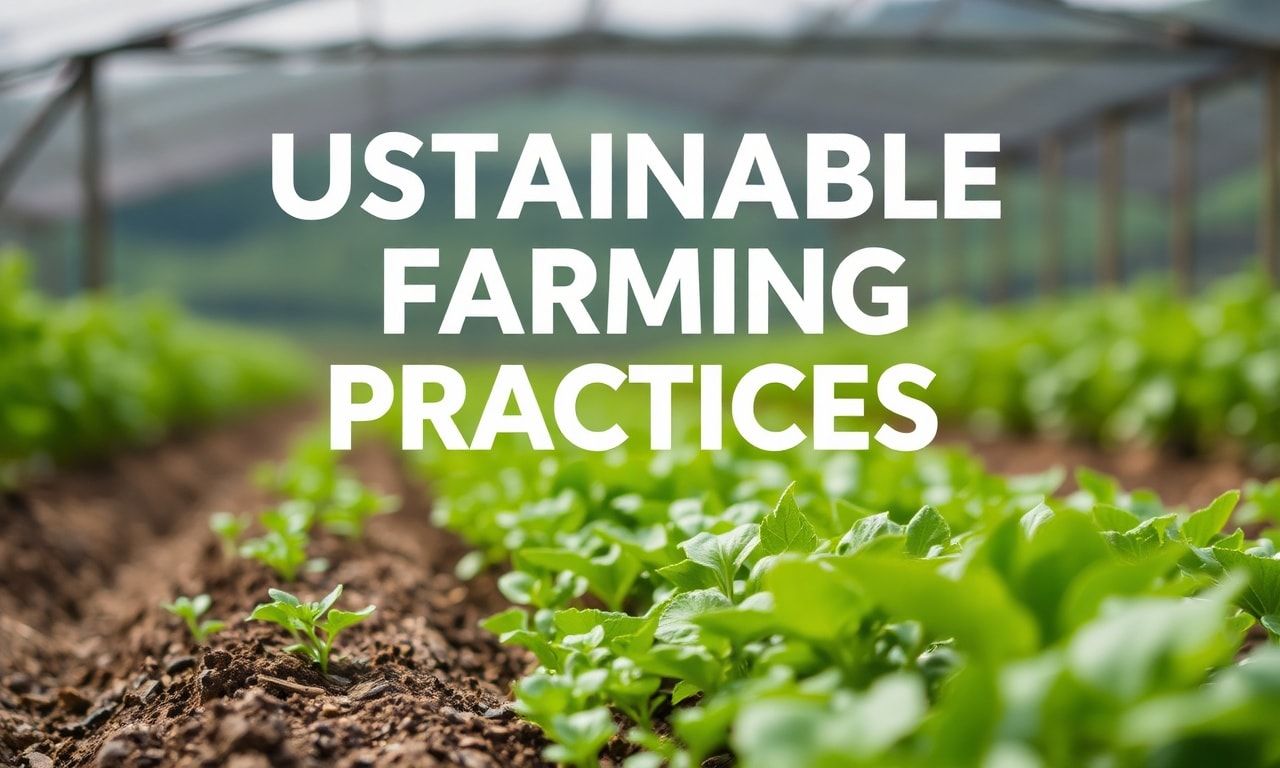
The Importance of Sustainable Farming
In the face of climate change and environmental degradation, sustainable farming practices have become more crucial than ever. Sustainable agriculture focuses on producing food, fiber, and other plant or animal products using farming techniques that protect the environment, public health, human communities, and animal welfare. This approach ensures that we can meet the needs of the present without compromising the ability of future generations to meet their own needs.
Sustainable farming practices include crop rotation, organic farming, agroforestry, and integrated pest management. These methods not only help in preserving the natural resources but also enhance the productivity and profitability of farms. By adopting these practices, farmers can contribute to a healthier ecosystem and a more resilient food system.
Crop Rotation: A Key to Soil Health
Crop rotation is one of the oldest and most effective sustainable farming practices. This technique involves growing a series of dissimilar or different plant families with distinct nutrient demands on the same land in sequential seasons. The primary goal of crop rotation is to improve soil structure and fertility, which in turn enhances crop yield and quality.
By rotating crops, farmers can break pest and disease cycles, reduce the need for chemical inputs, and improve soil health. For example, legumes can fix nitrogen in the soil, benefiting subsequent crops that require more nitrogen. Additionally, deep-rooted crops like alfalfa can break up compacted soil, improving water infiltration and rooting depth for shallow-rooted crops.
To implement crop rotation effectively, farmers should consider the following factors:
- Crop Selection: Choose crops that have different nutrient requirements and pest vulnerabilities.
- Sequence Planning: Plan the sequence of crops to maximize benefits such as nitrogen fixation and soil improvement.
- Field History: Consider the history of the field, including previous crops, pests, and diseases, to avoid repeating problems.
Organic Farming: A Holistic Approach
Organic farming is another sustainable practice that emphasizes the use of natural processes and materials. This approach avoids the use of synthetic pesticides, herbicides, and fertilizers, relying instead on natural methods to maintain soil fertility and control pests. Organic farming also promotes biodiversity, both above and below the ground, creating a more resilient ecosystem.
One of the key principles of organic farming is the use of compost and green manure to enrich the soil. Composting involves decomposing organic matter such as crop residues, animal manure, and food scraps to create a nutrient-rich soil amendment. Green manure, on the other hand, involves growing cover crops like clover or vetch and then tilling them into the soil to improve its structure and fertility.
For those interested in learning more about organic farming techniques, resources like illüstrasyon eğitimleri başlangıç rehber can provide valuable insights and practical guidance. These resources can help farmers transition to organic practices and improve their overall farming sustainability.
Agroforestry: Integrating Trees and Crops
Agroforestry is a land-use system that integrates trees, crops, and sometimes animals on the same piece of land. This practice can improve soil health, increase biodiversity, and provide additional income streams for farmers. Agroforestry systems can take many forms, including alley cropping, silvopasture, and windbreaks.
Alley cropping involves planting rows of trees or shrubs alternating with rows of crops. The trees provide shade, wind protection, and nutrients through leaf fall, while the crops benefit from improved microclimates and soil conditions. Silvopasture, on the other hand, combines trees with livestock grazing, providing shade and forage for the animals while improving soil health and carbon sequestration.
Windbreaks are another form of agroforestry that involves planting trees or shrubs in rows to protect crops and livestock from wind damage. Windbreaks can reduce soil erosion, improve microclimates, and enhance biodiversity by providing habitat for wildlife.
Integrated Pest Management: A Balanced Approach
Integrated Pest Management (IPM) is a sustainable approach to pest control that focuses on preventing pest problems rather than reacting to them. IPM uses a combination of biological, cultural, physical, and chemical methods to manage pests in an environmentally friendly way. The goal of IPM is to minimize the use of chemical pesticides while maximizing the effectiveness of pest control.
Biological control involves using natural predators, parasites, or pathogens to control pest populations. For example, ladybugs can be used to control aphids, while parasitic wasps can control caterpillars. Cultural control involves practices like crop rotation, intercropping, and sanitation to reduce pest habitats and disrupt pest life cycles.
Physical control methods include traps, barriers, and pheromones to monitor and control pest populations. Chemical control is used as a last resort and involves using pesticides in a targeted and judicious manner to minimize environmental impact. By integrating these methods, farmers can achieve effective pest control while promoting a healthier ecosystem.
Conclusion: Embracing Sustainable Practices
Sustainable farming practices are essential for ensuring the long-term viability of agriculture and the environment. By adopting practices like crop rotation, organic farming, agroforestry, and integrated pest management, farmers can improve soil health, enhance biodiversity, and increase the resilience of their farms. These practices not only benefit the environment but also contribute to the economic and social well-being of farming communities.
As the world faces increasing environmental challenges, the adoption of sustainable farming practices has become more urgent than ever. By embracing these practices, farmers can play a crucial role in building a more sustainable and resilient food system for future generations.
To delve deeper into the practices that ensure long-term agricultural success, consider exploring sustainable farming foundations and soil management.
As technology continues to shape our world, it’s crucial for farmers to stay informed about its impact on agriculture, which is why we suggest exploring future tech in farming.